
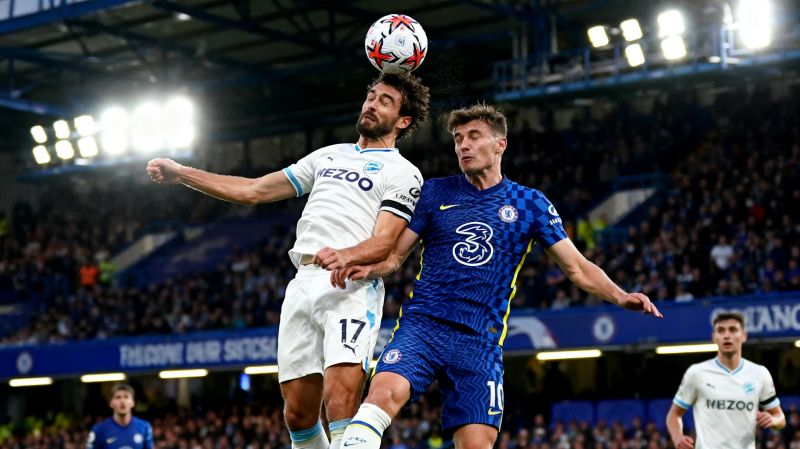
Chelsea vs Malmö isn't a fixture that usually tops the bill, but the 2021 Champions League group stage meeting at Stamford Bridge offered a clear window into Thomas Tuchel's rotational philosophy. The Blues won 4-0, yet the scoreline flattered them for long spells. Malmö's compact 5-3-2 frustrated Chelsea's build-up until a deflected Romelu Lukaku header broke the deadlock just before half-time. That goal changed everything. Malmö had to step out。and the space behind their wing-backs became a playground for Callum Hudson-Odoi and Reece James. This wasn't a thrashing born of dominance from kick-off;it was a patient dismantling of a disciplined low block, executed with the kind of ruthless efficiency that defines top-tier European nights.What struck me most about Chelsea vs Malmö was the performance of the supporting cast. With Mason Mount and Jorginho rested, Ruben Loftus-Cheek and Saúl Ñíguez anchored the midfield. Loftus-Cheek。
in particular, used his physical frame to carry the ball through Malmö's first line of pressure—a trait Tuchel later admitted he'd underutilized. Malmö's midfield trio, led by the tireless Anders Christiansen, tried to disrupt rhythm with tactical fouls, but referee François Letexier allowed play to flow. That leniency favored Chelsea's quick transitions. A small detail: Malmö's left wing-back, Martin Olsson, was repeatedly isolated against James and Hudson-Odoi. He looked every bit his 33 years by the 60th minute, and Chelsea's fourth goal came directly from that overload.Malmö's attacking threat was minimal, but not non-existent. Their best chance fell to Antonio Colak in the 22nd minute—a half-volley from the edge of the box that Edouard Mendy palmed wide. It was a reminder that Chelsea vs Malmö could have been nervier if the visitors had taken that chance. Instead, Malmö's forwards spent most of the night chasing shadows. Their manager, Jon Dahl Tomasson, set up to avoid humiliation rather than chase a result. That's a pragmatic choice for a club with Malmö's resources。but it made for a one-sided spectacle. The Swedish champions have since struggled to replicate their domestic dominance in Europe, and this match exposed the gap in athleticism and squad depth.Chelsea vs Malmö also highlighted Tuchel's in-game management. At 2-0。he brought on Kai Havertz and Hakim Ziyech, shifting to a 3-4-2-1 that pinned Malmö deeper. The substitutions weren't about resting legs—they were about maintaining intensity. Tuchel knew goal difference could matter in a group with Juventus. That's the kind of marginal thinking that separates elite coaches from the rest. Malmö, to their credit, never abandoned their shape. They defended with pride, and goalkeeper Johan Dahlin made six saves, including a sharp reflex stop from a Lukaku header. But pride doesn't win points at Stamford Bridge. The gulf in class was evident in the final twenty minutes, when Chelsea's substitutes toyed with Malmö's tired legs.Looking back, this Chelsea vs Malmö fixture was less about the result and more about what it revealed. Chelsea's depth was real。but their dependence on set-piece breakthroughs against low blocks was a recurring theme that season. Malmö left with lessons about the pace of Champions League football. For neutrals, it was a forgettable scoreline. For students of the game, it was a case study in breaking down a back five without resorting to panic. Tuchel's side didn't panic. They probed, shifted the ball, and waited for mistakes. That patience is a skill, and on this night, it was the difference between a routine win and a frustrating draw.