Alfred Brendel's recording of Beethoven's Diabelli Variations opens with a chord that sounds like a question. Not a rhetorical flourish—an actual inquiry, as if the pianist is asking the listener to lean in before the answer arrives. That questioning quality runs through nearly everything Brendel committed to tape over a six-decade career. He was never the flashiest pianist of his generation, nor the most emotionally extroverted. What he offered instead was a kind of structural intelligence, a way of hearing music as argument rather than atmosphere.I first encountered Brendel through his essays, oddly enough。before I heard him play. His writing on Beethoven's late sonatas reads like a detective's notebook—precise, skeptical, occasionally impatient with received wisdom. He once described the opening of Opus 110 as 'a lament that refuses to admit it is a lament,' a line that tells you more about the music than most program notes manage in a page. That same analytical temperament shaped his playing. In the Hammerklavier's fugue, his voicing is so deliberate that you can almost trace the contrapuntal lines with a finger. Some critics called it cerebral. I'd call it legible.Brendel's repertoire choices were equally deliberate. He built his reputation on Beethoven, Schubert, Mozart, and Liszt—composers whose scores reward long-form thinking. Schubert's late piano works。in particular, became something of a signature. His 1970s recordings of the Impromptus and Moments musicaux have a quality of unhurried conversation, as if the music is being thought through in real time rather than recited. Compare them to the more overtly beautiful readings by, say, Wilhelm Kempff, and Brendel's versions sound almost stubborn. He refuses to smooth over Schubert's sudden harmonic detours. He lets them sting.
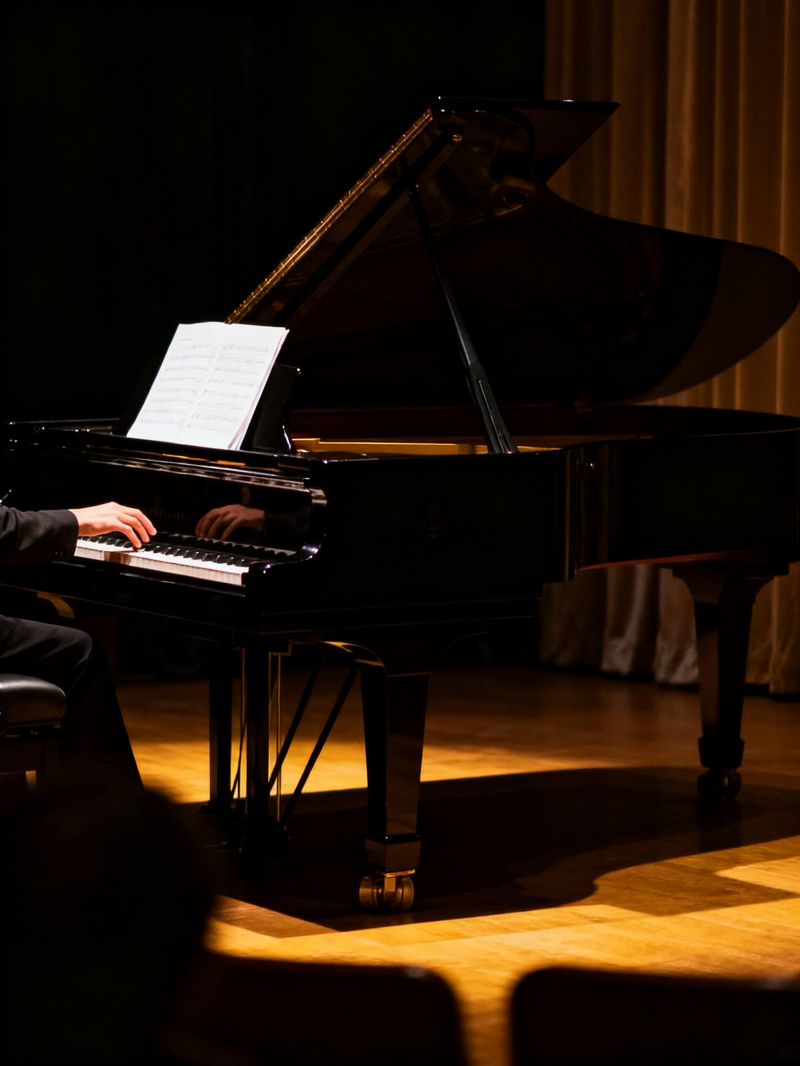
There's a moment in his 1994 farewell recital at the Royal Festival Hall—a Haydn sonata。I think—where Brendel pauses between movements just long enough to make the audience uncomfortable. It's not theatrical. It's the pause of someone checking his bearings before continuing. That habit of pausing, of refusing to let momentum carry him, defined his relationship with the score. He once told an interviewer that he practiced slowly not to build speed but to hear what he was doing. The remark sounds almost too simple, but it explains why his fortes never turn ugly and why his soft passages retain shape rather than dissolving into haze.Brendel stopped performing publicly in 2008, though he continued writing and occasionally lecturing. His absence from the concert stage has left a gap that's hard to name precisely. Plenty of pianists today play with more fire, more risk, more visible passion. Fewer seem willing to treat a recital as an extended argument—one that unfolds across an evening, with themes stated, developed, and resolved. That approach isn't fashionable. It may never have been. But listening to Brendel now。
years after his retirement, I find his recordings increasingly valuable precisely because they don't try to seduce. They ask you to follow. And they trust that you will.